Never Quit: A Comprehensive Evaluation of the Display Font
In the landscape of graphic design, typography serves as the primary vehicle for conveying tone and personality. When a project requires a visual voice that is bold, unyielding, and distinctly stylish, designers often turn to display typefaces. Never Quit is one such font, engineered to deliver a unique aesthetic that commands attention. This evaluation explores the characteristics of Never Quit, its practical applications, and the factors designers should consider before selecting it for their projects.
Understanding the Design Identity
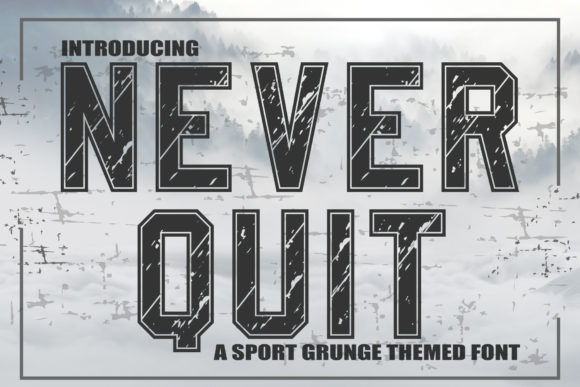
Never Quit is classified as a display font, a category reserved for large-scale text where legibility at small sizes is secondary to impact. The typeface is characterized by its stylish and unique structure, which sets it apart from standard serif or sans-serif families. Its name suggests a theme of resilience and determination, a sentiment reflected in the visual weight and confident strokes of the letters. Unlike utilitarian fonts designed for body copy, Never Quit is intended to be the focal point of a composition.
The font's distinctiveness lies in its ability to blend modern flair with a robust presence. It avoids the generic look of many pre-installed system fonts, offering a custom feel that can elevate the perceived value of a design. For professionals seeking to differentiate their work, this level of uniqueness is often a critical requirement.
Primary Applications and Use Cases
Due to its high-impact nature, Never Quit is best utilized in contexts where immediate visual engagement is necessary. It excels in scenarios where the message must be concise yet powerful. The following list outlines specific environments where this typeface performs exceptionally well:
- Posters and Event Promotions: The bold character of the font ensures that headlines are readable from a distance, making it ideal for concert posters, movie advertisements, and community event flyers.
- Thank You Cards and Greeting Cards: In personal stationery, Never Quit adds a creative touch that feels more bespoke than standard lettering. It works particularly well for messages requiring emphasis or emotional resonance.
- Quote Graphics: Social media graphics featuring inspirational quotes benefit from the font's strong attitude. The visual weight helps anchor the text, ensuring the message stands out against busy backgrounds.
- Logos and Branding: For businesses or individuals looking to project strength and creativity, Never Quit offers a solid foundation for logo construction. It provides a memorable mark that can define a brand identity.
- Business Cards: While body text on business cards requires clarity, the use of Never Quit for names or titles can create a striking contrast that leaves a lasting impression on potential clients.
Benefits of Selecting Never Quit
Adopting Never Quit into a design workflow offers several tangible advantages. First and foremost is the ability to make designs stand out. In a digital environment saturated with content, a distinctive typeface acts as a visual hook. The font's unique styling allows it to break through the monotony of standard typography without relying solely on color or imagery.
Additionally, the versatility of the font across different mediums is a significant asset. Whether printed on heavy cardstock for a thank you note or displayed on a high-resolution screen for a poster, the font maintains its integrity. This consistency ensures that the brand or message remains recognizable regardless of the platform. Furthermore, the font's stylistic approach supports a wide range of themes, from motivational campaigns to artistic portfolios, providing flexibility within a single tool.
Tradeoffs and Considerations
While Never Quit offers distinct benefits, it is not a universal solution. Display fonts inherently come with limitations regarding usage scope. The most critical tradeoff is readability at smaller sizes. Because the design prioritizes style over functional legibility, using Never Quit for paragraphs of text or dense information blocks will likely result in a poor user experience. Readers may struggle to process the text quickly, leading to disengagement.
Another consideration is the risk of overuse. Since the font is so visually dominant, it can easily overwhelm a design if not balanced correctly. If every element in a layout utilizes Never Quit, the overall composition may appear chaotic rather than curated. Designers must exercise restraint, using the font sparingly to highlight key elements rather than as the sole typographic voice.
There is also the factor of audience perception. The bold, assertive nature of Never Quit conveys a specific energy. If the goal of a project is to convey softness, elegance, or neutrality, this font may send the wrong message. It is essential to align the typography with the underlying emotional intent of the communication.
Situations Where Alternatives May Be Preferable
Designers should consider alternative typefaces when the project requirements prioritize efficiency and broad accessibility. For instance, in long-form editorial content, such as blog posts or magazine articles, a highly legible serif or sans-serif font is necessary to maintain reader flow. Similarly, for technical documentation or data-heavy presentations, a neutral font family is more appropriate to ensure information is absorbed accurately.
If the target audience includes diverse demographics with varying levels of literacy or visual acuity, a simpler, more traditional typeface might be a safer choice. Additionally, for corporate identities aiming for a conservative or understated image, the unique flair of Never Quit could be perceived as too casual or aggressive. In these cases, selecting a font with a more restrained character would better serve the strategic goals of the brand.
Practical Decision-Making Insights
To determine whether Never Quit aligns with your specific needs, evaluate the hierarchy of your design. Ask yourself if the text needs to be read quickly and thoroughly or if it needs to be seen and felt instantly. If the latter is true, Never Quit is a strong candidate. However, if the content requires sustained reading, pair it with a complementary body font that offers high legibility.
Consider the context of consumption. Is the design being viewed on a mobile device where space is limited? Or is it intended for a large format print where the font's details can be appreciated? Understanding the medium helps in deciding how much visual weight the font should carry. Testing the font in various sizes and weights during the mockup phase is crucial. This practical step reveals how the characters interact with other design elements and whether they retain their intended impact.
Ultimately, the decision to use Never Quit should be driven by the specific problem the design is solving. It is a powerful tool for creating memorable impressions, but like any tool, its effectiveness depends on the skill of the user. By balancing its bold aesthetic with clear structural principles, designers can leverage Never Quit to create work that is both visually stunning and strategically sound.