Shock: A Strategic Choice for High-Impact Display Typography
In the crowded landscape of digital and print media, visual hierarchy is not merely an aesthetic preference; it is a functional necessity. Designers constantly seek typefaces that can command attention without sacrificing legibility or professional credibility. Among the myriad of options available today, Shock has emerged as a distinct solution for projects requiring immediate visual impact. It is not simply another decorative font; it is an assertive, techno-styled display typeface designed to cut through noise.
When evaluating typography for posters, flyers, or large-format prints, the decision often comes down to balancing style with utility. Shock offers a unique position in this spectrum. Its geometric precision combined with a futuristic edge makes it particularly effective for specific contexts, yet it requires careful consideration before adoption. This analysis explores the characteristics of Shock, how it fits into broader design strategies, and the tradeoffs involved when selecting it over other display options.
Defining the Characteristics of Shock
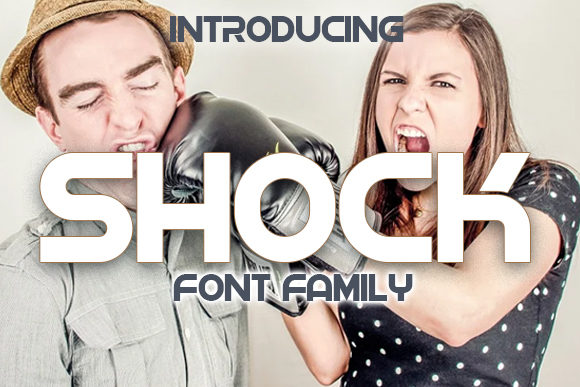
To understand where Shock fits in a design workflow, one must first examine its structural DNA. Unlike traditional serif or sans-serif fonts that rely on subtle variations in stroke weight to create rhythm, Shock leans heavily into a bold, industrial aesthetic. The term "techno-styled" implies a connection to electronic music culture, cyberpunk aesthetics, and high-energy environments. Visually, this translates to sharp angles, uniform line weights, and a sense of mechanical movement.
The assertiveness of Shock is its primary selling point. In a layout filled with text, this font acts as a visual anchor. It does not whisper; it declares. This quality makes it exceptionally well-suited for headlines where the goal is to arrest the viewer's gaze within a fraction of a second. The font's distinct personality allows it to convey themes of innovation, urgency, and modernity without the need for additional graphic elements.
However, the very traits that make Shock stand out also define its limitations. Its strong stylistic signature means it is less versatile than neutral typefaces like Helvetica or Arial. While those fonts serve as invisible containers for information, Shock demands to be seen. Consequently, it functions best as a display element rather than body copy. Attempting to set long-form text in Shock would likely result in reader fatigue, as the aggressive geometry creates visual vibration that strains the eye over extended reading periods.
Evaluating Fit: Where Shock Excels
Deciding whether to incorporate Shock into a project requires aligning the font's attributes with the communication goals of the piece. For event marketing, such as concerts, festivals, or tech product launches, Shock is often an ideal candidate. These events thrive on energy and anticipation. A flyer promoting an electronic music festival or a robotics competition benefits from the kinetic feel of the typeface. The font effectively communicates the atmosphere of the event before the user even reads the details.
Similarly, in the realm of print media, Shock performs admirably on posters intended for public spaces. Billboards, subway advertisements, and storefront signage require type that remains legible at various distances and speeds. The high contrast and bold strokes of Shock ensure that key messages survive the chaos of a busy environment. When paired with minimalist imagery or dark backgrounds, the techno-styled letters pop with a clarity that softer fonts might lack.
Another area where Shock proves valuable is in branding for industries associated with speed, technology, and disruption. Startups in the fintech, gaming, or cybersecurity sectors often look for visual identities that signal forward-thinking. Using Shock in a logo or hero banner can instantly establish a tone of cutting-edge capability. It suggests that the brand is not bound by tradition but is instead pushing boundaries.
It is important to note that the success of Shock in these scenarios relies heavily on execution. The font works best when given ample negative space. Cluttered layouts can dilute the power of the typeface, making the design appear chaotic rather than controlled. Designers must allow the font to breathe, using it sparingly to maximize its impact.
Comparative Analysis: Alternatives and Contexts
No single typeface is universally superior; the choice depends entirely on the specific constraints and objectives of the project. When considering Shock, designers often weigh it against other categories of display fonts, including brutalist sans-serifs, hand-drawn scripts, and classic slab serifs.
Compared to brutalist typography, which shares a raw, unpolished aesthetic, Shock offers a more refined and structured look. Brutalist fonts often embrace imperfection and asymmetry, evoking a sense of grit and rebellion. Shock, while assertive, maintains a level of geometric perfection that feels more engineered and precise. If a project aims for an underground, DIY vibe, a brutalist alternative might be more appropriate. However, if the goal is to convey sleek professionalism with an edge, Shock is the stronger contender.
When pitted against hand-drawn or script styles, the distinction becomes even clearer. Script fonts introduce warmth, humanity, and organic flow. They are excellent for invitations, lifestyle brands, or creative portfolios where personality and approachability are paramount. Shock provides none of this warmth. Its rigid structure can feel cold or impersonal if used in contexts requiring emotional connection. Therefore, while a script font might be the right choice for a wedding invitation, Shock would be the logical selection for a concert poster.
Even among techno-styled fonts, there is variation. Some competitors lean heavily into retro-futurism, mimicking the pixelated look of early computer graphics. Others focus on fluid, liquid forms. Shock occupies a middle ground, prioritizing solid form and angularity over nostalgia or fluidity. This makes it timeless in a way that strictly retro fonts are not; it references the future without being tied to a specific era of technology.
Navigating Tradeoffs and Limitations
Selecting Shock involves acknowledging what it cannot do. As a highly stylized display font, it lacks the subtlety required for nuanced communication. It is not designed to handle complex typographic hierarchies within a single paragraph. Furthermore, accessibility considerations must be taken into account. While Shock is legible at large sizes, its tight spacing and sharp terminals can reduce readability at smaller sizes or on low-resolution screens.
There is also the risk of stylistic fatigue. Because Shock is so distinctive, overusing it can lead to a monotonous visual experience. If a designer uses Shock for every headline across a multi-page document or a website, the impact diminishes. The novelty wears off, and the design begins to feel repetitive. To mitigate this, it is advisable to pair Shock with a highly neutral supporting typeface. A simple, clean sans-serif or a classic serif can provide the necessary balance, allowing Shock to shine as the focal point without overwhelming the entire composition.
Another practical limitation is availability and licensing. Like many specialized display fonts, Shock may come with specific usage restrictions. Designers working on commercial projects must ensure they have the proper licenses for web, print, and merchandise applications. Ignoring these legal nuances can lead to significant complications later in the production process. Always verify the scope of the license before finalizing any design that relies on Shock.
Making the Final Decision
The question of whether to use Shock ultimately boils down to the specific needs of the audience and the message. If the goal is to evoke excitement, highlight a technological advancement, or create a memorable visual statement for a short-duration medium, Shock is a powerful tool. Its ability to function as a standalone graphic element simplifies the design process, reducing the need for heavy illustration or photography to carry the weight of the concept.
Conversely, if the project requires a tone of trustworthiness, calmness, or approachability, Shock may be counterproductive. In corporate communications, educational materials, or healthcare contexts, the assertive nature of the font could alienate the audience. In these cases, a more conventional typeface would better serve the purpose of building rapport and ensuring clear information transfer.
Ultimately, the value of Shock lies in its specificity. It is not a jack-of-all-trades font, but rather a specialist instrument. By understanding its strengths in creating high-impact visuals and respecting its limitations regarding versatility and readability, designers can leverage its potential effectively. Whether applied to a striking poster, a dynamic flyer, or a bold digital banner, Shock offers endless possibilities for those willing to work within its unique parameters. The key is to treat it not just as a font, but as a deliberate design choice that shapes the perception of the content it frames.