Sweet Rainbow: The Quirky Display Font That Can Save or Sink Your Design
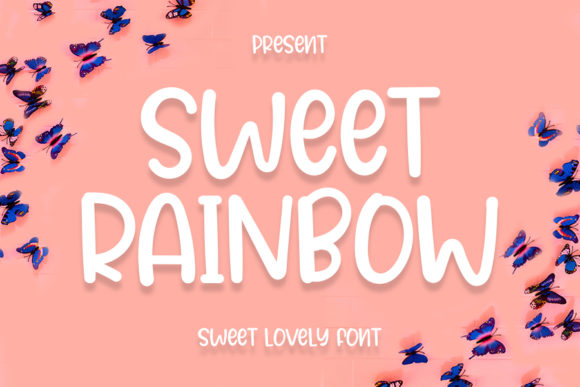
If you are looking for a typeface that immediately injects energy, charm, and a touch of whimsy into your projects, Sweet Rainbow is likely the perfect candidate. This cute and charming display font is designed to be more than just text; it acts as a visual event. Its quirky personality allows it to brighten up each of your designs, turning standard headlines into memorable focal points. However, while the font itself is delightful, using it effectively requires a specific mindset. Many designers and business owners assume that because a font looks fun, it will automatically make their project better. Unfortunately, this assumption often leads to designs that feel chaotic rather than curated.
The goal isn't just to download a pretty font; it is to understand how to wield its unique character without overwhelming your audience. Whether you are a small business owner trying to stand out on social media, a blogger wanting to add personality to your posts, or a professional marketer crafting a campaign, the decision to use Sweet Rainbow should be strategic. Let's explore what makes this font special and, more importantly, where common pitfalls lie when integrating such a distinctive typeface into serious work.
Understanding the Personality of Sweet Rainbow
Sweet Rainbow is not a neutral tool like Arial or Helvetica. It carries an inherent narrative of playfulness and joy. When you add it confidently to your projects, you are signaling to your audience that the content is lighthearted, creative, or celebratory. This font works exceptionally well for branding in sectors like children's products, confectionery, party planning, or lifestyle blogs focused on hobbies and creativity. The "quirky" nature of the letters suggests a brand that doesn't take itself too seriously but still cares deeply about aesthetics.
However, the very trait that makes it charming—its distinct shape and whimsical flow—is also what limits its application. A common misunderstanding among beginners is treating all fonts as interchangeable decoration. They might grab Sweet Rainbow because it looks cool and apply it to a corporate financial report or a medical instruction manual. This creates an immediate disconnect between the message and the medium. If your design screams "fun" while your content speaks of "serious obligations," your audience will lose trust. The font sets the emotional tone before a single word is read, so mismatching that tone with your subject matter can ruin the entire communication strategy.
Common Mistakes in Application
Even experienced creators sometimes stumble when working with display fonts. Here are the most frequent errors that undermine the potential of Sweet Rainbow.
- Overusing the Font: One of the biggest mistakes is using Sweet Rainbow for body text or long paragraphs. Because the characters are stylized and have varying stroke widths, they reduce readability significantly when used in large blocks. This forces the reader to work harder to decode the words, leading to fatigue and disengagement. Use it for headlines, logos, or short captions only.
- Poor Contrast with Backgrounds: Since this font is meant to be bold and eye-catching, it demands attention. Placing it on a busy or low-contrast background dilutes its impact. If the colors clash or the texture behind the text is too complex, the "brightening" effect is lost, and the design looks messy instead of vibrant.
- Ignoring Legibility at Small Sizes: Quirky fonts often rely on fine details to show their character. When scaled down for mobile screens, business cards, or footers, these details blur together. A logo that looks great on a website banner might become an indecipherable blob on a product label. Always test your typography across different sizes before finalizing a design.
- Mismatching Pairings: Some users try to pair Sweet Rainbow with other display fonts, creating a visual competition that confuses the viewer. When combining typefaces, ensure the secondary font is simple and neutral to let the main font shine. A clean sans-serif usually pairs best to balance the whimsy.
How These Errors Impact Your Results
When you overlook these details, the consequences go beyond mere aesthetics. In a professional context, poor typographic choices can directly affect usability and efficiency. For instance, if a freelancer uses Sweet Rainbow for a client's invoice header, the client might struggle to quickly identify the document's purpose, causing delays in payment processing. Similarly, for educators creating learning materials, hard-to-read headers can distract students from the actual lesson content.
From a marketing perspective, the cost of a bad font choice is measured in lost engagement. If a user scrolls past a post because the headline is visually jarring or difficult to parse, you have failed to capture their attention. Furthermore, using a playful font for serious announcements can damage credibility. If a brand wants to appear trustworthy and established, a font that looks like a toy store sign can unintentionally signal immaturity or lack of professionalism. The result is a gap between the intended message and the perceived reality.
Best Practices for Success
To avoid these pitfalls and ensure that adding Sweet Rainbow to your projects yields positive results, follow these practical guidelines. First, define the hierarchy of your design clearly. Decide which information needs to pop and which needs to recede. Use the font exclusively for the elements that require the most emphasis, such as titles, key offers, or call-to-action buttons.
Second, pay close attention to spacing. Whimsical fonts often have irregular shapes that require generous kerning (space between letters) and leading (space between lines) to breathe. Crowding the text together makes the quirks look like errors. Give the letters room to move, and the design will feel intentional and polished.
Third, always check the licensing terms before downloading or purchasing. While many fonts are free for personal use, commercial applications often require a separate license. Failing to verify this can lead to legal issues and unexpected costs later. Ensure you have the right to use the font for your specific project scope, whether it is a blog, a print ad, or a product packaging.
Evaluating Your Decision Before You Commit
Before you finalize a design featuring Sweet Rainbow, ask yourself a few critical questions. Does this font align with the core values of the brand or project? Will it remain legible on the devices your audience is most likely to use? Does it complement the other visual elements, or does it fight for dominance?
It is also wise to create a mockup. Seeing the font in context is vastly different from viewing it in isolation. Place it next to your images, within your layout grid, and against your chosen color palette. If the design feels balanced and the message is clear, you have found the right approach. If the text feels like it is shouting over the rest of the content, step back and consider a subtler alternative or adjust the size and weight.
Ultimately, Sweet Rainbow is a powerful tool for anyone looking to add a spark of personality to their work. By understanding its limitations and applying it with intention, you can create designs that are not only cute and charming but also effective and professional. Avoid the trap of using it blindly, and instead, embrace it as a deliberate choice that enhances your communication. When used correctly, the results will speak for themselves, leaving your audience delighted and engaged.