Alister Font Evaluation
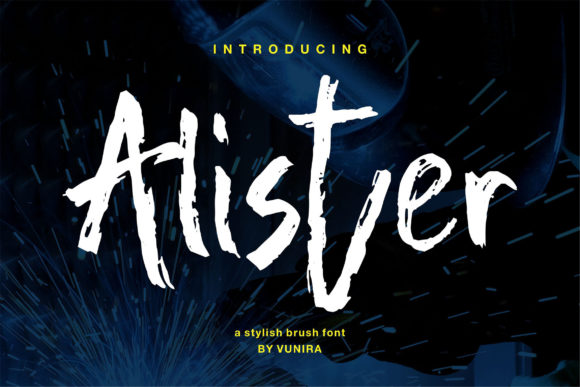
In the vast landscape of digital typography, finding a typeface that commands attention while maintaining structural integrity is a common challenge for designers. Among the many options available, Alister has emerged as a distinct choice for projects requiring a bold, tactile presence. Described as a daring, rough-textured, and brush display font, Alister offers a specific aesthetic that diverges from clean, minimalist sans-serifs or traditional serif classifications. This evaluation explores the characteristics of Alister, its potential applications, and the practical considerations designers should weigh before incorporating it into their workflow.
Understanding the Alister Typeface
Alister is not designed for body text or long-form reading. Instead, it falls squarely into the category of display fonts. Its defining feature is its "rough texture," which mimics the irregularities of a physical brush stroke on paper. This texture provides a sense of movement and organic imperfection that is often difficult to achieve with geometric or mechanical typefaces. The "daring" nature of the font suggests high contrast and strong visual weight, making it suitable for headlines, logos, and poster art where immediate impact is prioritized over subtlety.
The font’s library value lies in its versatility within the realm of expressive design. While it may not pair easily with delicate scripts or ultra-thin weights, it serves as an incredible asset when the goal is to convey energy, raw emotion, or a handcrafted feel. For designers building a comprehensive font library, Alister fills the niche for gritty, urban, or vintage-inspired aesthetics without relying on low-quality scan artifacts.
Why Designers Consider Alister
There are several reasons why Alister might appear on a designer’s shortlist. First, it offers an instant stylistic cue. When used correctly, the font communicates a mood—whether that be rebellious, artistic, or rugged—without the need for additional graphical elements. This can streamline the design process, allowing the typography to carry the narrative weight of the piece.
Furthermore, Alister’s textured appearance adds depth to flat designs. In an era where digital interfaces often lean toward minimalism, introducing a rough, brush-like element can create a striking focal point. It breaks the monotony of smooth vector shapes and introduces a human touch, which can enhance brand personality in industries such as music, fashion, streetwear, or artisanal food and beverage.
- Visual Impact: The rough texture grabs attention more effectively than standard sans-serifs.
- Brand Personality: It conveys authenticity and craftsmanship.
- Artistic Flexibility: It works well in both digital and print media where high resolution is maintained.
Benefits and Tradeoffs
Evaluating any typeface requires a balanced look at its strengths and limitations. The primary benefit of Alister is its ability to elevate a creation through sheer presence. It reduces the need for complex graphic overlays because the letterforms themselves are visually interesting. However, this strength is also its greatest limitation.
The rough texture and irregular edges mean that Alister is not legible at small sizes. Using it for subheadings or captions can result in a muddy, hard-to-read experience. Additionally, the "daring" nature of the font means it can quickly become overwhelming if overused. A design dominated entirely by Alister may feel chaotic rather than impactful. Therefore, the tradeoff involves sacrificing readability and subtlety for high-impact expression.
Another consideration is pairing. Because Alister is so dominant, it requires complementary fonts that do not compete for attention. Clean, neutral sans-serifs or simple serifs often work best to balance the visual noise of the brush texture. If paired with another decorative font, the design risks becoming cluttered and unprofessional.
Situations Where Alister Is a Strong Fit
Alister shines in contexts where the message is brief and the visual medium allows for large-scale reproduction. Ideal use cases include:
- Event Posters and Flyers: Music festivals, art exhibitions, and club nights benefit from the energetic, raw vibe of the font.
- Logo Design: For brands seeking a rugged or handcrafted identity, such as breweries, tattoo studios, or outdoor gear companies.
- Editorial Headlines: Magazine covers or blog headers that aim to provoke curiosity or emphasize urgency.
- Packaging Design: Product labels where texture can simulate premium or artisanal qualities.
In these scenarios, the font’s potential to elevate the creation is fully realized. The audience is expected to engage with the design briefly, making the immediate visual punch of Alister highly effective.
When to Consider Alternatives
Despite its strengths, Alister is not a universal solution. There are numerous situations where other typefaces would be more appropriate. If the project requires extensive body copy, Alister will hinder communication. Similarly, if the brand identity relies on precision, technology, or corporate stability, the organic roughness of Alister may send the wrong message.
For web design, performance and accessibility must also be considered. Display fonts like Alister often have larger file sizes due to detailed glyph structures. If the website load speed is a priority, using such a font extensively could negatively impact user experience. Furthermore, on lower-resolution screens, the fine details of the rough texture may disappear or appear jagged, reducing the intended effect.
In these cases, designers might look toward robust sans-serif families that offer multiple weights but maintain clean lines, or perhaps a simpler slab serif that provides structure without the aggressive texture. Evaluating the end-user’s environment and the brand’s core values is crucial before committing to a display font.
Practical Decision-Making Insights
To determine whether Alister aligns with your goals, consider the following questions during the selection process:
- What is the hierarchy? Will the font be used sparingly for emphasis, or does it dominate the layout?
- Who is the audience? Does the target demographic respond well to edgy, unconventional aesthetics?
- Where will it live? Is the output medium high-resolution enough to render the texture accurately?
By answering these questions objectively, designers can avoid the trap of choosing a font solely because it looks cool. Alister is a powerful tool, but like all tools, it must be applied with intention. When used strategically to highlight key messages or define a brand’s character, it proves to be an invaluable addition to a designer’s arsenal. However, when clarity and neutrality are paramount, stepping back to a more conventional typeface is the wiser professional choice.
Ultimately, the decision to use Alister depends on the specific needs of the project. It is not a replacement for foundational typography but rather a specialized accent. By understanding its capabilities and limitations, designers can leverage its unique texture to create compelling, memorable visual experiences that stand out in a crowded digital landscape.